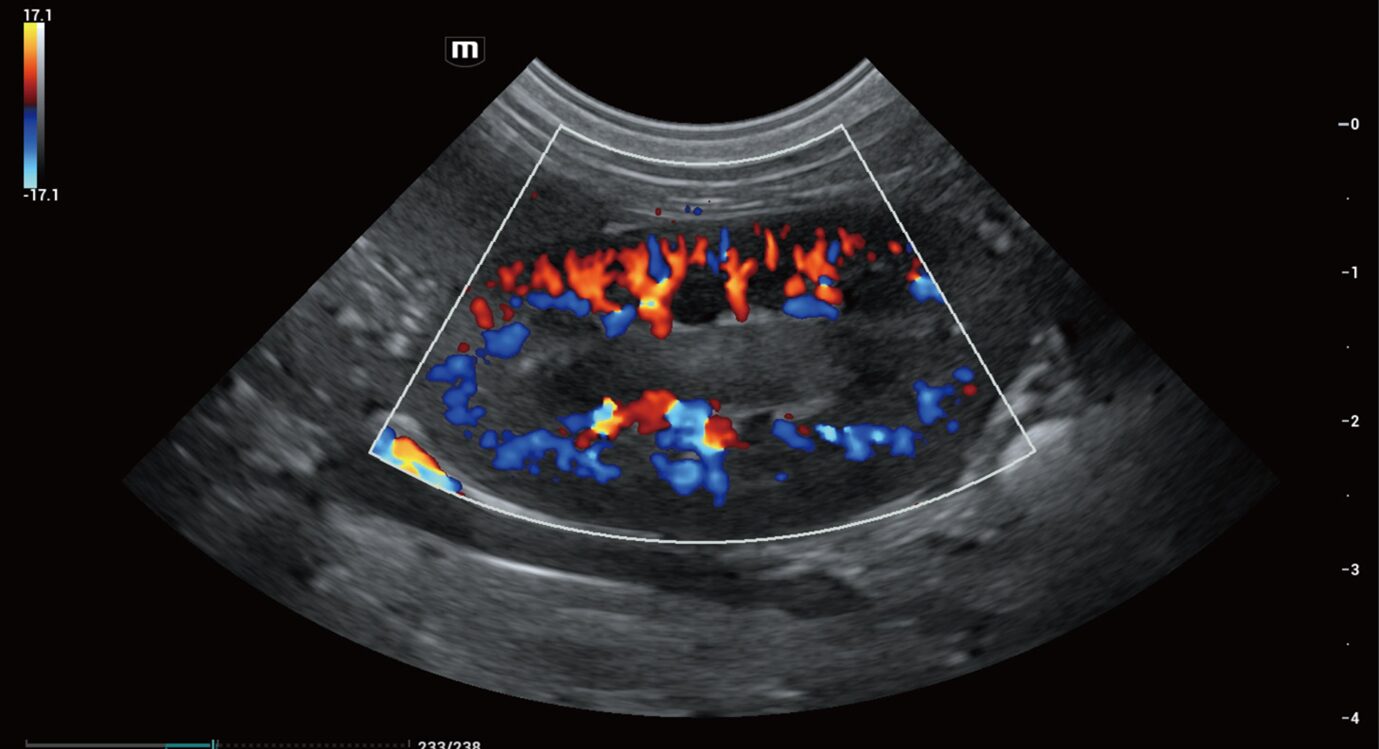
 Colour Doppler ultrasound assessing blood flow within the kidney’s blood vessels
This is a thorough, non-invasive examination of your pet’s abdominal organs. It allows assessment of the gastrointestinal tract, liver, spleen, pancreas, kidneys and urinary bladder, as well as the adrenal and reproductive organs and nearby lymph nodes.
It helps to gain a detailed understanding of abdominal health and identify changes that may not be detectable on X-rays or through a physical examination alone.
 Splenic elastography showing spleen tissue stiffness to help guide diagnosis and treatment decisions.
Abdominal ultrasound is commonly recommended when pets show signs such as vomiting, diarrhoea, weight loss, increased thirst or urination, abdominal pain, or a suspected lump or mass.
It is also useful when blood tests suggest issues with the liver, kidneys, pancreas, or adrenal glands, or when urinary or reproductive tract disease is suspected. Ultrasound plays an important role in assessing unexplained abdominal fluid and in staging certain cancers by evaluating organs such as the liver, spleen, and lymph nodes.
When needed, samples from organs or masses can also be taken during the same procedure using ultrasound guidance, helping to reach a diagnosis quickly and safely.