How is “Cherry Eye” treated?
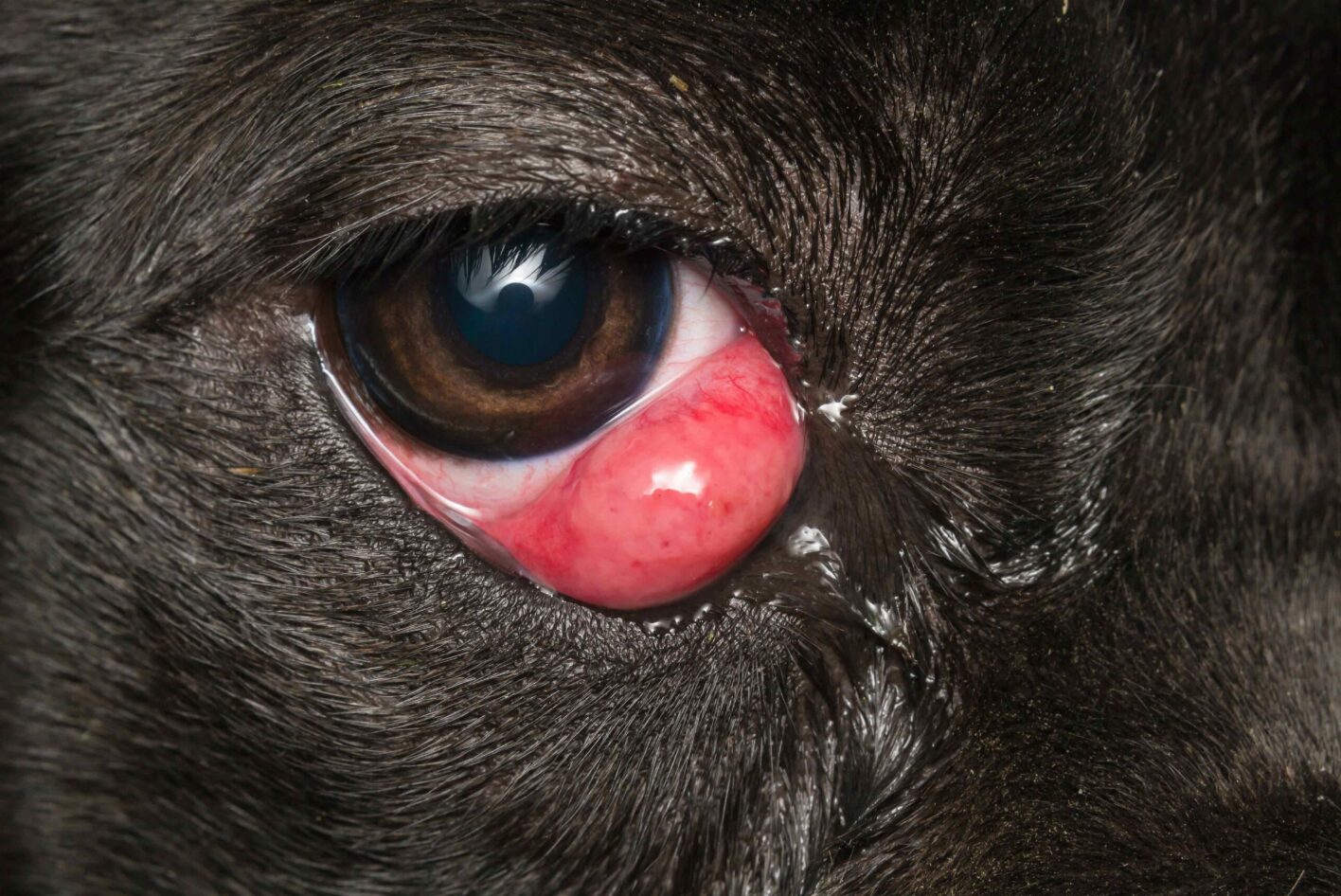
Cherry eye is usually treated with surgery. The aim is to gently move the gland back into its normal position, so it can function properly again and keep your dog comfortable.
This gland plays an important role in keeping the eye healthy—it produces around a third of your dog’s tears, which help keep the eye moist and protected.
In a healthy eye, the gland is held in place by supportive tissue. When this support weakens, the gland can pop out, causing the red swelling often seen in the corner of the eye.
If left untreated, this can lead to reduced tear production and ongoing eye problems, such as “dry eye,” which can be uncomfortable and affect long-term eye health.
Surgery helps restore the normal position of the gland, protects tear production, and reduces the risk of future complications.
Surgical options for “Cherry Eye”
There are a few different ways to treat cherry eye, and each has its pros and cons.
The most commonly used technique is called a “pocket” procedure. This involves tucking the gland back into place so it can heal where it should be. It allows the third eyelid to keep moving normally, although tear production may be slightly reduced.
Another option is to stitch the gland more firmly into place. This can help maintain tear production, but it may limit the natural movement of the third eyelid—something that normally helps protect and clean the eye, a bit like a windscreen wiper.
What we don’t recommend is removing the gland. This gland produces around a third of your dog’s tears, so removing it greatly increases the risk of long-term dry eye, which can be uncomfortable and require lifelong treatment.
Where possible, preserving and repositioning the gland gives the best chance of maintaining healthy, comfortable eyes.
You can find more information about recovery and aftercare in the resources section below.